Breast Cancer: Complete Awareness Guide
1. What Is Breast Cancer?
Breast cancer is a disease in which cells in the breast grow abnormally and uncontrollably. These cells can form a tumour and may spread to other parts of the body if not treated.
Breast cancer mainly affects women, but men can also develop it. Early detection and appropriate treatment can improve the chances of successful treatment.
2. Signs and Symptoms of Breast Cancer
Common warning signs include:
-
A lump in the breast: A new lump or thickened area in the breast or underarm.
-
Changes in breast size or shape: One breast may look different from usual.
-
Skin changes: Redness, dimpling, puckering or thickening of the skin.
-
Nipple changes: A nipple that turns inward or changes appearance.
-
Unusual discharge: Fluid from the nipple, especially bloody discharge.
-
Persistent pain: Ongoing pain in the breast or underarm.
These symptoms do not always indicate cancer. However, any new or persistent breast change should be checked by a healthcare professional.
3. Causes and Risk Factors
The exact cause of breast cancer is not always known. However, several factors can increase the risk:
-
Age: The risk generally increases with age.
-
Family history: Close relatives with breast cancer may increase the risk.
-
Genetic factors: Inherited changes in genes such as BRCA1 and BRCA2 can increase risk.
-
Hormonal factors: Certain lifetime hormone exposures can affect risk.
-
Lifestyle factors: Physical inactivity and excess body weight, especially after menopause, can increase risk.
-
Previous radiation exposure: Radiation treatment to the chest at a young age can increase risk.
Having risk factors does not mean a person will definitely develop breast cancer. People without known risk factors can also develop it.
4. How Is Breast Cancer Diagnosed?
Doctors may use the following tests:
-
Clinical examination: A healthcare professional examines the breast and underarm.
-
Mammogram: An X-ray examination that can detect suspicious breast changes.
-
Ultrasound: Uses sound waves to examine breast tissue.
-
Biopsy: A tissue sample is examined in a laboratory to determine whether cancer cells are present.
-
Additional tests: MRI and other investigations may be used when necessary.
A biopsy is generally needed to confirm a breast cancer diagnosis.
5. Stages of Breast Cancer
Breast cancer is commonly classified into four main stages of invasive disease, with Stage 0 describing certain non-invasive cancers.
-
Stage 0: Abnormal cells remain confined to their original structures.
-
Stage I: Early invasive cancer, generally limited in extent.
-
Stage II: Cancer is larger or may have spread to nearby lymph nodes.
-
Stage III: Cancer has spread more extensively to nearby tissues or lymph nodes.
-
Stage IV: Cancer has spread to distant organs, such as the bones, liver or lungs.
The stage helps doctors decide which treatment is most appropriate.
6. Treatment Options
Breast cancer treatment depends on the type and stage of the disease and the patient's overall health.
-
Surgery: Removes the tumour or, when necessary, the entire breast.
-
Radiation therapy: Uses high-energy radiation to destroy cancer cells in a targeted area.
-
Chemotherapy: Uses medicines to kill cancer cells or stop their growth.
-
Hormone therapy: Treats cancers that depend on hormones.
-
Targeted therapy: Attacks specific features of cancer cells.
-
Immunotherapy: Helps the immune system fight cancer in selected cases.
Many breast cancers, especially those detected early, can be treated successfully. Treatment should be planned by qualified medical professionals.
7. How Can We Reduce the Risk?
Although not every case can be prevented, the following steps may help reduce risk and support early detection:
-
Maintain a healthy body weight.
-
Participate in regular physical activity.
-
Eat a balanced diet.
-
Limit alcohol consumption.
-
Follow screening recommendations appropriate to your age and personal risk.
-
Learn what is normal for your breasts and seek medical advice about unusual changes.
Breast self-awareness is helpful, but it does not replace recommended medical screening.
8. When Should You See a Doctor?
Consult a healthcare professional if you notice:
-
A new lump in the breast or underarm.
-
Unusual nipple discharge.
-
Changes in breast shape or size.
-
Skin dimpling or persistent redness.
-
A newly inverted nipple.
-
Any other unusual or persistent breast change.
Do not wait for pain to develop before seeking medical advice.
9. Breast Cancer Awareness in Pakistan
Breast cancer awareness is important in Pakistan because fear, embarrassment, misinformation and difficulties accessing healthcare can delay diagnosis.
Communities can help by encouraging women to seek medical advice, sharing accurate information, supporting patients and helping them access appropriate treatment. Breast cancer should be discussed respectfully and without shame.
10. Conclusion
Breast cancer is a serious disease, but early detection, timely diagnosis and appropriate treatment can make a significant difference. Everyone should understand the warning signs, follow recommended screening advice and seek medical attention when something seems unusual.
Breast Cancer Awareness Message:
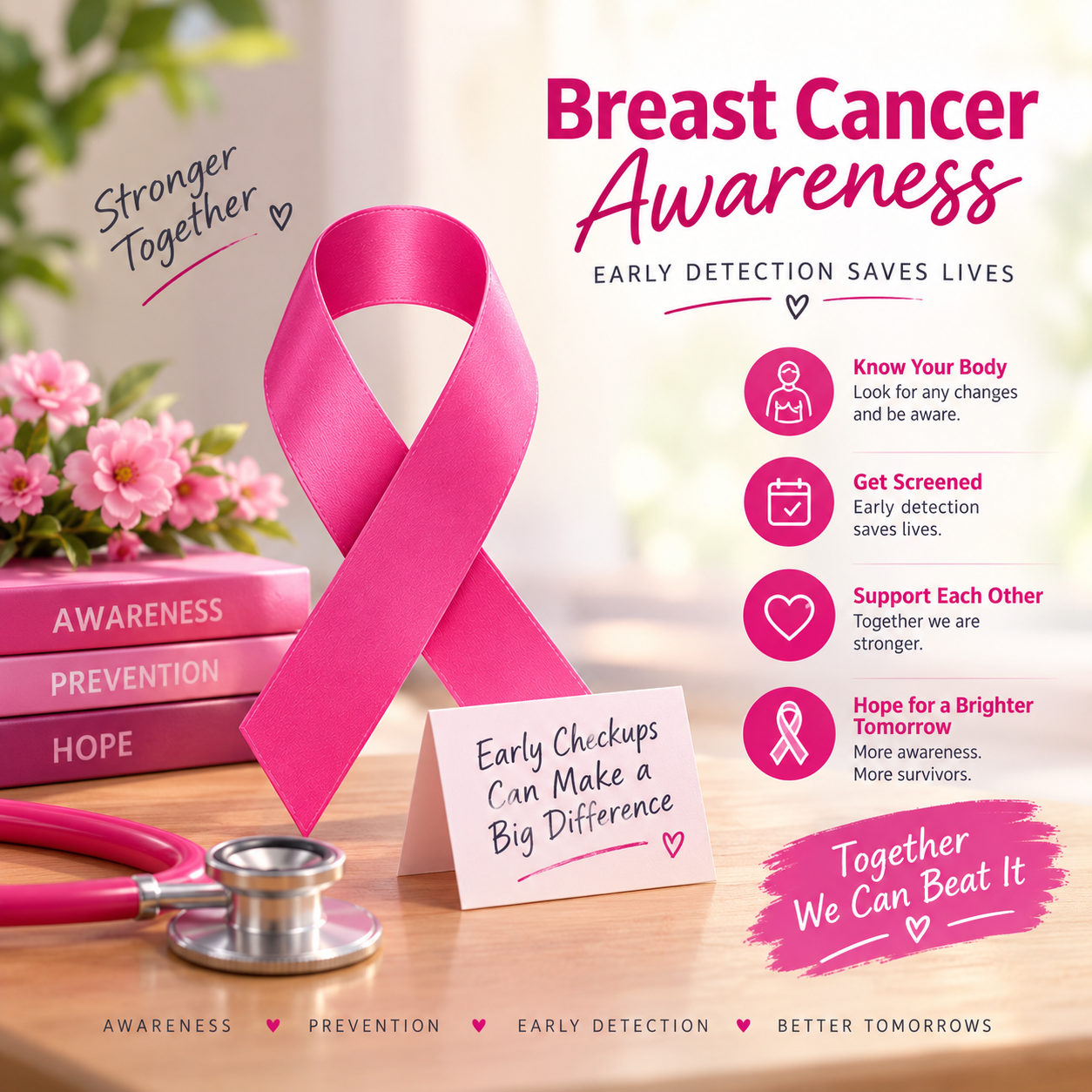
“Know the signs. Get checked. Support one another. Early detection saves lives.”
Reliable source: World Health Organization (WHO) — Breast Cancer Fact Sheet
Comments (0)
Log in to leave a comment.
No comments yet. Be the first to share your thoughts!